They Wanted To Burn a Mosque
Why Religious Education Must Never Avoid Difficult Conversations
In Religious Education and Philosophy, I believe it is our responsibility to tackle some of the most challenging issues facing our communities today. Even at GCSE and A-level, students should be looking beyond the classroom and asking what religion and philosophy have to say about the world as it really is.
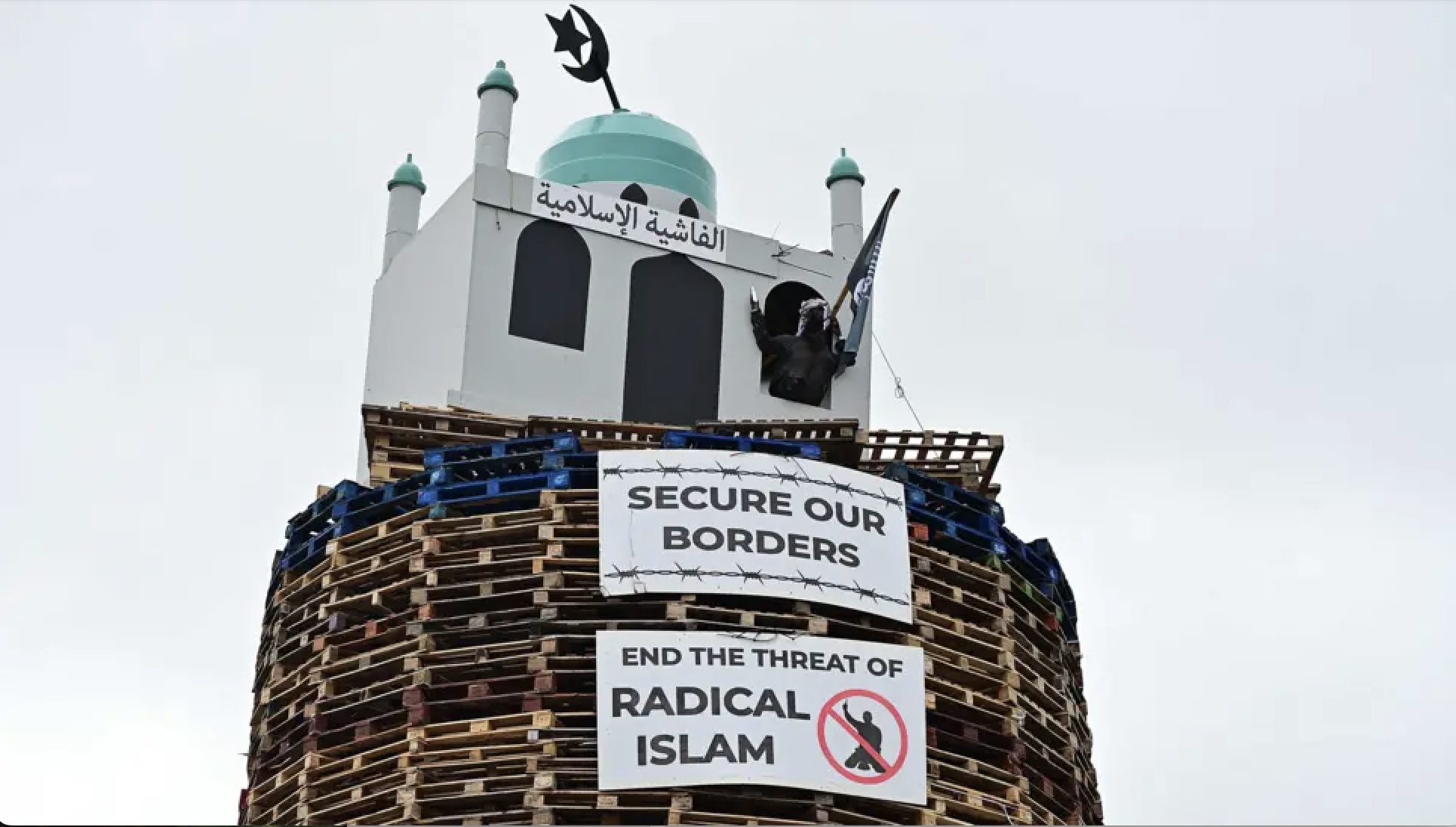
Yesterday morning, I woke up to a photograph on the BBC that genuinely shocked me. It showed a bonfire in Northern Ireland, and on top of it, the local community had placed an effigy of a mosque.
A Celebration — or Something More?
On Saturday, many Protestant communities across Northern Ireland lit traditional bonfires to commemorate King William of Orange's victory over the Catholic King James II at the Battle of the Boyne in 1690. It is a centuries-old tradition rooted in a deeply divided history.
This particular bonfire was lit on the evening of 11 July to begin those celebrations. Had events gone ahead as planned, the model mosque—representing neither Catholicism nor Protestantism—would literally have been burned to the ground.
I lived in Northern Ireland for seven years, and experiences like this were among the reasons I eventually chose to leave. From my perspective, burning an effigy of any person, place or community is neither humorous nor a legitimate form of political expression. It is an act intended to communicate hostility.
Protest, Freedom of Speech, and Hate
Spokespeople connected with the Moygashel bonfire argued that it was an expression of community identity and freedom of speech. They are unhappy about immigration, and one way they chose to express that dissatisfaction was by burning a model mosque.
There are so many philosophical and religious questions wrapped up in this single story that it's difficult to know where to begin. But I think it is exactly the sort of issue GCSE and A-level Religious Studies students should be discussing.
Understanding the Context
Before we rush to judgement, we need to understand the context.
Some people within this community genuinely believe they are being culturally displaced or threatened by immigration. Their instinctive response is to push back against what they perceive as change.
However, two assumptions immediately stand out.
The first is the automatic association between Muslims and immigration. The second is the assumption that Islam itself represents a threat.
The banner attached to the bonfire read "No to Radical Islam." Yet Northern Ireland remains one of the least religiously diverse parts of the United Kingdom. Radical Islam—and, indeed, Islam more generally—is not a significant presence in the area.
So is this really about security? Or is it prejudice presented in another form?
That's for you to decide.
Where Should Freedom of Speech End?
Freedom of speech is one of the great debates running through politics, philosophy and religious education.
How far should people be free to say—or do—whatever they wish, even when others find it deeply offensive?
Personally, I find the proposed burning of a mosque deeply offensive. More importantly, I can only imagine how intimidating it must feel for Muslims living in Northern Ireland, however small their numbers, to see a symbol of their faith placed on top of a bonfire.
Does that mean the organisers should have been prevented from doing it?
That's the difficult philosophical question.
As a legal aside, freedom of expression is not unlimited. The law also recognises offences relating to threatening behaviour and the stirring up of hatred. Whether this particular incident crossed that legal threshold is ultimately for the authorities and the courts to determine. Morally, however, many people will have strong views either way.
What Would a Utilitarian Say?
Let's apply one of the ethical theories you may study.
Imagine, for the sake of argument, that burning the mosque made the majority of people in that community feel happier, while only a tiny minority felt distressed.
Would a straightforward utilitarian conclude that it was therefore the right thing to do?
If morality is simply about producing the greatest happiness for the greatest number, uncomfortable conclusions can sometimes follow.
This is exactly why philosophers continue debating utilitarianism centuries after it was first developed.
The Reality of Religious Differences
My fourth thought concerns religious harmony.
Much of what students encounter in Religious Education focuses on dialogue, cooperation and mutual understanding between faiths. We rightly study interfaith work and examples of communities living peacefully together.
Sometimes there is an unspoken assumption that, deep down, all religions are basically saying the same thing.
But how well does that assumption fit with many religious scriptures—including passages in the Bible, the Qur'an and elsewhere—that make exclusive truth claims and, in some historical contexts, contain commands involving violence against opponents?
Taken to extremes, religious certainty has helped justify movements ranging from the Crusades to Islamist terrorism and organisations such as the Ku Klux Klan.
That does not mean religions inevitably produce violence. It does mean we should be honest enough to study both the inspiring and the disturbing parts of religious history.
Religious Education Should Be Challenging
Religious Education is necessarily messy.
At one school where I worked, I was once reprimanded simply for mentioning the Israeli–Palestinian conflict—one of the most historically significant conflicts involving questions of religion, identity and politics.
"We don't talk about that," I was told. "It's school policy."
I profoundly disagree with that approach.
If we avoid difficult questions, we deny students the opportunity to develop the critical thinking skills they will need throughout their lives.
Why These Conversations Matter
My hope is that GCSE and A-level students will rise above easy answers.
Life isn't simple. Religion is complex. Philosophy is difficult. That's exactly as it should be.
Only by examining the hardest questions—such as why a community would choose to burn a model of a mosque—can we begin to understand how societies work, why conflicts emerge, and how prejudice develops.
And only then do we stand a chance of making our communities more thoughtful, more compassionate and, ultimately, better places to live.
That's one of the reasons I wanted to teach Religious Education and Philosophy in the first place.
But what do you think?
- Was the Moygashel bonfire an example of legitimate freedom of speech, or did it cross the line into hate? Why?
- Should people ever be allowed to express views that deeply offend others if they believe they are defending their community or culture? Where should the limits be?
- What is the role of Religious Education in schools? Should it avoid controversial issues to prevent conflict, or should it help students examine them critically, even when the discussions are uncomfortable?